
Two words for two
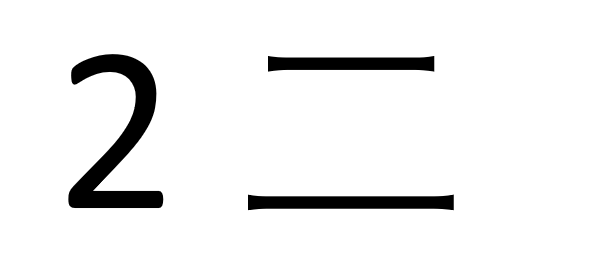
In an earlier post, I finished showing how to count in Mandarin, including large numbers and some of the odd features of the counting, like the way that Chinese say two ten-thousands rather than twenty-thousand.
But another thing that I constantly messed up when first learning Mandarin was the word for two. And that’s because there are two words for two. I suppose that’s not surprising if you think about how many words we use for zero.
二 (èr) is two and
两 (liǎng) is also two
二 (èr) is most commonly used for counting like one, two, three, and so on.
It’s also used for positions:
第 二 个 (dì èr gè) means “the second one”
第 二 次 (dì èr cì) means “the second time”
But when you are describing a number of things (and using measure words), you typically use 两 (liǎng) instead.
两 天 (liǎng tiān) is two days
两 个 月 (liǎng gè yuè) is two months
两 块 (liǎng kuài) is two pieces (of something - and can be money)
But there are always exceptions
I would have expected two o’clock to be the counting version but it’s not. It’s:
两 点 (liǎng diǎn) is two o’clock (I can only imagine that it somehow relates to two positions on the clock)
And even in numbers, 两 (liǎng) can be used, to count the number of hundreds and so on:
二百 (èr bǎi) is two hundred but 两百 (liǎngbǎi) is also commonly used.
Sometimes, mixtures will be used:
一千两百零二本书 (yī qiān liǎng bǎi líng èr běn shū) is one thousand, two hundred and two books
So you can be forgiven if it’s not all immediately obvious.
2019-04-12